Boy Sitting on the Luggage Quick Stitch: A Business Review
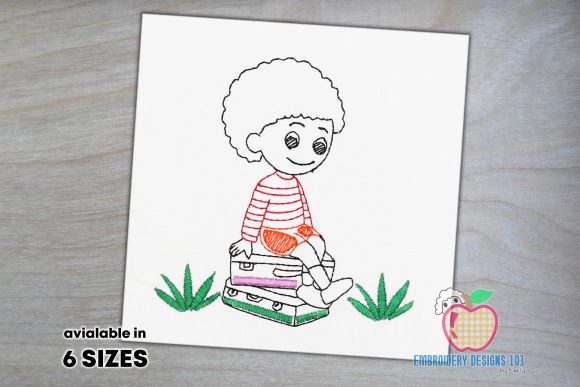
As an experienced embroidery designer who has digitized and reviewed thousands of machine embroidery designs, I know the difference between a decorative file and a true business asset. When I first evaluated the Boy Sitting on the Luggage Quick Stitch digital embroidery file, I immediately recognized its potential for small business owners, apparel decorators, and handmade brands. The name itself tells you exactly what you need to know: "Quick Stitch" means production efficiency, and "not 100% filled" means a soft, wearable, and flexible finished product. This review will break down exactly how this design performs for branded merchandise, embroidered patches, custom apparel, and small business merch.
For a small café, boutique, creative studio, or bakery looking to build a strong brand identity, the Boy Sitting on the Luggage Quick Stitch offers a unique blend of narrative charm and professional practicality. It is not just a decoration; it is a tool for storytelling. Let's explore how this design holds up under the lens of commercial embroidery.
First Impressions: Why "Quick Stitch" Matters for Business
In the world of commercial embroidery, time is money, and comfort is king. The "Quick Stitch" nature of this machine embroidery design is a strategic advantage. The description explicitly states it is "not 100% filled." For a small business owner, this is a feature, not a flaw. High-density fills can make a garment stiff, heavy, and uncomfortable, especially on aprons, caps, or lightweight t-shirts. This design keeps the fabric soft and breathable, which is critical for customer satisfaction.
The design itself feels modern, friendly, and slightly nostalgic, which fits perfectly with current trends in handmade product and boutique branding. It avoids looking overly corporate, making it ideal for businesses that want to emphasize personality and authenticity. Whether you are creating an embroidered patch for a local event or designing staff uniforms, the Boy Sitting on the Luggage Quick Stitch establishes a visual tone that is approachable and professional.
Real-World Applications for Branded Merchandise
Versatility is key when investing in a digital embroidery file. The Boy Sitting on the Luggage Quick Stitch performs beautifully across a wide range of base products. Here is how it translates into real business use:
- Staff Uniforms & Aprons: Imagine a local coffee shop or bakery. A single-color version of the design embroidered on the chest of a denim or canvas apron creates a cohesive, artisan brand identity. It tells a story of travel, comfort, and home. The low stitch density means the apron remains soft and flexible, which is a huge plus for employees who wear them all day.
- Embroidered Patches: Because it is a quick stitch, the design is naturally flexible. This makes it an excellent candidate for an embroidered patch. It will not curl or buckle as much as a heavy, 100% fill patch when attached to curved surfaces like caps, jackets, or tote bags. It is a fantastic way to add a premium touch to custom apparel.
- Tote Bag Design: This is one of the strongest applications. A large-scale version of the Boy Sitting on the Luggage Quick Stitch on a canvas tote bag creates a high-end, boutique feel. It becomes a walking advertisement for your brand, and customers love a unique, story-driven tote bag design.
- Cap Embroidery: The compact nature of the design makes it suitable for cap fronts. It respects the curve of the crown and, because it is not overly dense, it will not distort the structure of the hat. This is a challenging placement for many designs, but the quick stitch density helps it sit flat.
- Boutique Merchandise & Product Labels: For handmade product brands, this design adds a layer of narrative. It can be used as a small accent on clothing tags, as a decorative element on packaging, or as a standalone piece of merchandise. It elevates the finished product from generic to branded.
Where to Use This Design Carefully
No design is a universal solution. As an embroidery designer, I always advise testing before full production. The Boy Sitting on the Luggage Quick Stitch has specific characteristics that require attention.
Small Patch Sizes and Scaling: The "Boy" is a detailed figure. If you scale it down too small—for example, under 2 inches in height—the fine details like the face, arms, and luggage handles may lose definition. The "not 100% filled" nature means the negative space is doing a lot of the work. At very small sizes, this can blur or fill in. Always test the design at your target size on a scrap of fabric first.
High Contrast Fabrics: Because the design is not solid, it relies on the fabric to show through the negative space. This works brilliantly on light-to-medium solid colors. However, on very dark or heavily textured fabrics, the contrast might be lost. A light thread color is essential for dark uniforms. Similarly, avoid placing it on busy patterns or striped fabrics, which can interfere with the clarity of the design.
Frequent Washing and Wear: For items like aprons, work shirts, and caps that endure frequent washing, the stabilizer choice is critical. While the quick stitch density is less prone to "pull-away" than heavy fills, using a poor-quality tear-away stabilizer can lead to distortion over time. A cutaway stabilizer is highly recommended for maintaining the integrity of the design over the life of the garment.
Critical Design Considerations for Professional Results
To get the most out of the Boy Sitting on the Luggage Quick Stitch for your small business merch, follow these professional embroidery designer notes.
Testing Stitch Density and Scaling
Before you run a batch of 50 aprons, do a single test stitch. The "Quick Stitch" claim is promising, but you must verify the stitch count and density on your own machine. Check the spacing between the boy and the luggage. Ensure the underlay is sufficient to prevent shifting on textured fabrics. Create a printable mockup for client approval to confirm the size and placement match their specific base product. This step saves time and money in the long run.
Fabric, Stabilizer, and Thread Contrast
For a design that is not 100% filled, a cutaway stabilizer is usually best for garments to maintain stability over time. For a tote bag or a patch, a high-quality tear-away might work, but cutaway is safer. The fabric texture matters. A smooth twill or denim will highlight the design's crisp lines, while a heavily textured fabric like a thick sweater might swallow the details. Thread color is also crucial. The design is detailed, so a solid, non-variegated thread color works best to make the silhouette clear. I recommend testing the design in black and white first to check the contrast and spacing before moving to your brand colors.
Commercial Licensing and File Formats
As a digital embroidery file buyer, you must confirm the commercial licensing rights associated with the Boy Sitting on the Luggage Quick Stitch. Can you use it on merchandise you sell? The product page describes it as a "Quick Stitch Machine Embroidery Design," but always check the specific license of the shop before using it for commercial embroidery. This is a critical step for Etsy sellers and small business merchandise creators. Ensure you have the correct file format for your machine (e.g., .dst, .pes, .exp) and confirm the available hoop sizes. The product description mentions "multiple sizes as shown in product image," which is a strong advantage for versatility.
The Bottom Line for Small Business Owners
The Boy Sitting on the Luggage Quick Stitch is a strong design asset for any small business looking to build a memorable brand identity through custom apparel and merchandise. It balances a professional, friendly aesthetic with production efficiency, making it a smart investment for Etsy sellers, café owners, boutique brands, and creative studios. The "Quick Stitch" and "not 100% filled" features are practical advantages that translate to softer garments, faster production times, and happier customers. When used thoughtfully—with proper testing, stabilizer, and scaling—it creates a premium finished product that builds customer trust, recognition, and loyalty. This is a design that works as hard as you do.