Dream Catcher Mandala Embroidery Design Review
When a small business owner asks me to review an embroidery design for their merchandise line, I look at it through a completely different lens than a hobbyist would. I am not just asking whether it is pretty. I am asking whether it builds brand identity, whether it survives production, whether it fits on a cap front or a tote bag pocket, and whether it makes customers feel something about the business. Dream Catcher Mandala landed on my desk recently as a candidate for a local café, a boutique florist, and a handmade soap brand. Here is my honest review as an embroidery designer who has seen too many designs fail in production.
First Impression: Elegant, Approachable, and Commercial
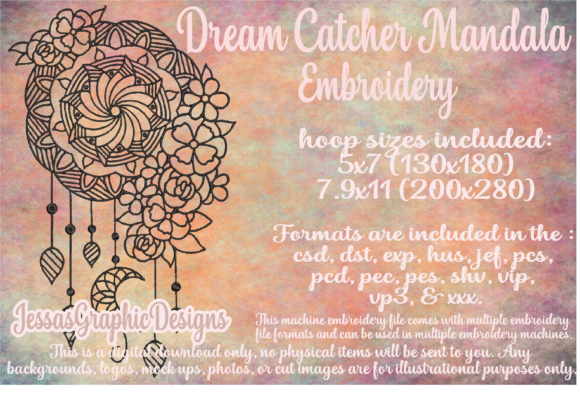
The moment I opened Dream Catcher Mandala, I noticed its balanced composition. It is not overly ornate or intimidating. It feels elegant yet friendly, which is a rare combination for a machine embroidery design in the mandala category. Many mandala designs lean heavily into dense, intricate fills that look beautiful on screen but become a mess on fabric. Dream Catcher Mandala reads as professional and polished, with a softness that suggests handmade care rather than cold precision. For a small business, that visual tone is gold. It says we care about details without screaming for attention.
This design works well for businesses that want to project warmth, creativity, and quality. A café, a bakery, a creative studio, a pet brand, or a boutique could all use Dream Catcher Mandala as a signature mark. It is decorative enough to stand alone, but not so busy that it competes with other brand elements. That is exactly what I look for in an embroidery file intended for small business merch.
Patch Performance: Built for Real Products
One of the first questions I ask about any design is whether it can be turned into an embroidered patch. Patches are a staple for small business merchandise because they are removable, reusable, and easy to apply to hats, bags, aprons, and jackets. Dream Catcher Mandala has a shape that lends itself well to patch production. The circular motif is classic, and the open areas within the dream catcher structure allow the fabric or patch backing to breathe. This reduces the risk of puckering and keeps the patch flat against the garment.
I would recommend testing this design at a patch size of around three to four inches in diameter. At that size, the details remain visible without becoming too dense. If you scale it down too much, you risk losing the delicate inner web lines that make the dream catcher recognisable. For a chest patch on a staff uniform or a small accent on a tote bag, three inches is ideal. For a cap front or a sleeve detail, you might go slightly smaller, but I would stop at two and a half inches. Anything smaller, and the stitch density may cause the fabric to stiffen, which is not ideal for cap embroidery or curved surfaces.
Where Dream Catcher Mandala Shines in Business Use
Let me walk you through the specific applications where Dream Catcher Mandala delivers real value for a small business.
Staff Uniforms and Aprons
For a café, bakery, or florist, staff uniforms need to look cohesive without being boring. Dream Catcher Mandala works beautifully as a chest logo or a back yoke accent on aprons. The design is large enough to be seen from across the counter, but it does not overwhelm the garment. I have seen too many apron embroidery designs that look like a wall of thread. This one breathes. The open centre and the feather-like details give it a light, airy feel that matches the hospitality vibe. If your staff wear aprons daily, you want a design that washes well and does not trap dirt. The moderate stitch density of Dream Catcher Mandala means it holds up to repeated washing without losing shape, especially if you use a quality stabilizer underneath.
Tote Bags and Customer Merchandise
Tote bags are one of the highest-margin items in any small business merch lineup. Customers love them, they are easy to produce, and they serve as walking advertisements. Dream Catcher Mandala sits perfectly on a tote bag pocket or centred on the front panel. Because the design is circular, it aligns naturally with the bag shape. I recommend using a medium-weight cutaway stabilizer for tote bags, especially if the fabric is canvas or cotton twill. The design will stitch out cleanly, and the finished product will feel premium. For a handmade soap brand or a boutique, this kind of tote bag design elevates the entire customer experience.
Caps and Hats
Cap embroidery is notoriously tricky. Curved surfaces, thick fabric, and limited space require a design that is both compact and legible. Dream Catcher Mandala works on cap fronts if you keep the size to about two and a half inches. The central motif reads clearly, and the outer ring provides a natural frame that prevents the design from looking lost. However, I would avoid placing the full design on a cap if your business name or logo needs to be included. The cap front is small, and adding text alongside the mandala may crowd the space. If you want a cap design, consider using just the inner dream catcher element without the outer ring. That way, you keep the brand identity without sacrificing clarity.
Where to Use Caution: Size, Fabric, and Placement
No design is perfect for every scenario. Dream Catcher Mandala has a few limitations that every apparel decorator and small business owner should know before production.
Small Patch Sizes
As I mentioned earlier, scaling this design below two and a half inches is risky. The fine lines of the dream catcher web can become distorted or break entirely at small sizes. If you are planning to use Dream Catcher Mandala as a tiny accent on a shirt collar or a pocket edge, test it first. I recommend stitching a sample at the intended size and examining the detail under good light. If the lines blur together, consider enlarging the design or simplifying the embroidery file.
High Stitch Density Areas
The outer ring of the mandala is the most dense part of the design. If you are embroidering on a lightweight fabric like a dress shirt or a thin polyester blend, the ring may cause the fabric to pucker or distort. Always use a proper stabilizer and test on a scrap piece of the same fabric before committing to a full run. For commercial embroidery projects, I recommend a tear-away stabilizer for stable fabrics and a cutaway stabilizer for stretchy or delicate fabrics. If you are making embroidered patches, use a heavy-duty backing to keep the patch flat and durable.
Dark Uniforms and High Contrast
Dream Catcher Mandala is described as elegant and gorgeous, and it will look stunning on light to medium fabrics. On dark uniforms, however, you need to be careful with thread colors. If you use white or light thread on a black or navy garment, the contrast will be high, but the design may feel harsh. I recommend testing the design in a metallic or pastel thread to soften the contrast while still maintaining visibility. Alternatively, use a dark thread with a subtle sheen for a more understated look. For a brand identity that feels professional and approachable, thread color choice is just as important as the design itself.
Brand Identity and Customer Trust
When a customer buys a product with Dream Catcher Mandala on it, they are not just buying a tote bag or a cap. They are buying into the brand story. A mandala evokes creativity, balance, and intention. For a handmade product brand, a creative studio, or a wellness-oriented business, this design reinforces the message that the business values quality and artistry. I have seen handmade product lines double their perceived value simply by switching from a plain logo to a thoughtful embroidery design like this one.
From a brand identity perspective, Dream Catcher Mandala is versatile enough to work across multiple product categories. It can be a standalone logo accent, a secondary pattern, or a decorative element on packaging. If you create printable mockups for your Etsy shop or website, this design photographs beautifully. It adds a tactile, handmade feel that digital assets often lack. For Etsy sellers and craft business owners, this is a major advantage. Customers trust what they can see and feel, and embroidery communicates care.
Practical Embroidery Designer Notes
Before you send Dream Catcher Mandala to production, here are the steps I always follow with any new digital embroidery file.
- Test it in black and white first. Stitch the design using a single thread color on a neutral fabric. This reveals any issues with stitch density, spacing, or jump stitches without wasting expensive thread.
- Check the hoop size. Confirm that the design fits within your smallest hoop. If you are using a 4x4 hoop, ensure the design does not exceed the stitching area. Dream Catcher Mandala may need a larger hoop if you plan to use the full outer ring.
- Review thread color contrast. Place the design against your actual fabric and evaluate whether the thread colors pop or blend. Low contrast can make the design look muddy, especially on textured fabrics.
- Inspect spacing. Look for gaps between elements that are too tight or too loose. Tight spacing can cause thread breaks, while loose spacing can make the design look unfinished.
- Test on real fabric. Never rely on a digital preview alone. Stitch a sample on the exact fabric you will use for production. This is the only way to catch issues with fabric texture, stabilizer compatibility, and overall appearance.
- Create a mockup for client approval. If you are producing merchandise for a client, show them a realistic mockup of the design on the actual product. This builds trust and reduces the chance of costly revisions later.
- Compare it beside other design assets. Make sure Dream Catcher Mandala aligns with the brand's existing visual identity. If the brand uses bold, modern typography, a delicate mandala may clash. If the brand is organic and artistic, this design will fit naturally.
- Confirm commercial licensing. Before using any embroidery file for commercial embroidery or merchandise, verify the license terms. Some designs are for personal use only. If the product page does not specify commercial use, contact the seller. You do not want to build a product line on a design you cannot legally sell.
Final Verdict: A Smart Choice for Small Business Merch
Dream Catcher Mandala is a strong candidate for small business merchandise, embroidered patches, and branded product lines. It is elegant without being fussy, detailed without being fragile, and versatile enough to work across aprons, caps, tote bags, and uniforms. As long as you respect its size limitations, test it on real fabric, and choose thread colors wisely, this design will serve your brand well. It is the kind of machine embroidery design that makes customers stop, look, and remember your business. And in the world of custom apparel and small business merch, that is exactly what you need.