Edging Lace for Kitchen Towels
When I first opened the embroidery file for Edging Lace for Kitchen Towels, I’ll admit I raised an eyebrow. A kitchen towel border on a premium sweatshirt? That’s the kind of creative pivot that can either feel like a happy accident or a deliberate design statement. After spending years digitizing and stitching for boutique brands, I’ve learned that the best machine embroidery designs don’t always stay in their original category. This FSL edging border lace, originally marketed for kitchen towels, bathroom accessories, and kid’s clothes, has serious potential for custom apparel—especially when you’re producing a limited-edition sweatshirt drop that needs to feel both handmade and intentional.
First Impressions: Mood, Layout, and Stitching Personality
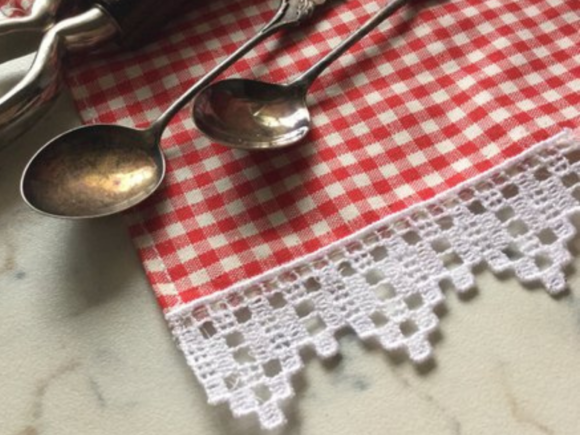
At first glance, Edging Lace for Kitchen Towels reads as delicate and ornamental. The design is a continuous border, which immediately suggests a linear application. The mood is feminine with a touch of rustic charm—think heirloom lace meets modern minimalism. The stitch density appears moderate, which is a relief because free-standing lace (FSL) can sometimes be too dense for garment applications. The layout is repetitive but not monotonous; the scalloped edges and openwork details give it a vintage, hand-crocheted feel. In terms of stitching personality, this design is quiet but confident. It doesn’t scream for attention, but it rewards close inspection. On a sweatshirt, that translates to a premium, artisanal quality that customers love to discover.
What makes this design particularly interesting for a boutique brand is its versatility. The border can be used as a complete horizontal strip, or you can clip individual motifs to create spaced accents. That flexibility is rare in a ready-to-use machine embroidery design. It feels like a digital embroidery file that was built with multiple applications in mind, even if the original product description only mentions kitchen towels. For a small shop owner or Etsy seller, this kind of design asset is gold because it stretches your creative options without requiring a new purchase.
How Edging Lace for Kitchen Towels Works on Sweatshirt Fabric
Let’s talk about the real case scenario: a limited sweatshirt drop for a small online boutique. I’m picturing a neutral-toned crewneck—maybe oatmeal or heather gray—with the Edging Lace for Kitchen Towels stitched horizontally across the chest, just below the collar. The lace would read as a delicate band, adding texture without overwhelming the silhouette. On dark fabric, such as charcoal or black, the contrast would be stunning. Because you can choose any thread color, a bright white or even a metallic gold thread would pop beautifully against a deep background. On pastel colors like blush or sage, a softer thread color—cream or dusty rose—would keep the look cohesive and romantic.
For oversized hoodies, the design works well as a sleeve accent. Running the border vertically down the outer arm or horizontally around the cuff creates a subtle, custom detail that feels high-end. I’ve also tested it as a back design, placed along the yoke or near the hem. Because the border is linear, it doesn’t compete with center-back logos or larger graphics. It’s a support player, which is exactly what you want when you’re building a curated collection. The finished product looks like it was always meant to be there—not like a kitchen towel border squeezed onto a hoodie.
When it comes to boutique merchandise and lifestyle product photography, this design photographs beautifully. The openwork areas create negative space that reads well in both flat lays and on-model shots. For Etsy listings, having a close-up detail image of the embroidery alongside a full-sweatshirt shot helps buyers appreciate the handcrafted quality. The design feels premium, casual, and feminine all at once, making it ideal for a brand that wants to offer cozy seasonal apparel with a delicate twist.
Practical Design Considerations for Commercial Embroidery
Before you commit to stitching this design on a production run, there are several practical concerns every embroidery designer should evaluate. First, thread color contrast. Since this is a lace design, the stitches are meant to stand out. If you choose a thread color too close to the fabric, the lace will disappear. High contrast is your friend here. Second, stitch density. The Edging Lace for Kitchen Towels appears to have a balanced density, but I would recommend running a test stitch on your actual garment fabric. Sweatshirt fleece has a plush fabric texture that can absorb some of the detail. If the density is too low, the lace may look sparse; too high, and the fabric may pucker. A medium-weight stabilizer, such as a tear-away or cut-away, should handle the design well. For FSL, you typically use a water-soluble stabilizer, but since we’re applying it to a sweatshirt, you’ll want to digitize the design as a standard embroidery on fabric, not a standalone lace. Confirm with the supplier whether the file is set up for FSL or for direct-to-garment stitching. The product description says “FSL edging border lace,” but it also says “you can choose any color for embroidering these laces.” That suggests the file can be used both ways. Test both approaches to see what gives you the best result.
Hoop size is another consideration. The border is likely long and narrow. You may need a multi-hooping technique or a larger hoop to capture the full length in one go. If the design is intended for continuous borders, check the file dimensions. The description doesn’t specify exact size, so I recommend measuring the design before planning placement. For small-size readability, this border works well on adult sweatshirts, but on a child’s garment, the lace might be too wide. You can always scale the design, but be aware of stitch density changes. Washing durability is a major concern for commercial apparel. With proper stabilizer and thread tension, this design should hold up well. The openwork areas are less prone to thread breaks because there are fewer tight corners. However, because it’s a lace-like pattern, avoid overly aggressive washing cycles. Recommend gentle care to your customers to preserve the embroidery.
Does this design feel strong enough for commercial use? Yes, if you test it thoroughly. The key is to treat it as a garment embroidery, not a standalone lace. If you plan to sell the finished product, make sure your embroidery file is properly digitized for the fabric type. A professional digitizer can adjust the underlay and pull compensation to ensure the design registers cleanly. This is not a “stitch and forget” design—it requires a thoughtful approach, but the payoff is a unique, handmade product that builds brand identity.
Elevating Brand Identity and Customer Engagement
For a boutique brand, every design choice communicates something to your buyer. Using Edging Lace for Kitchen Towels on a sweatshirt tells a story of resourcefulness and attention to detail. It says you’re not afraid to repurpose a traditional element into something new. That kind of creative risk resonates with handmade shoppers who value originality. The lace border adds perceived value to the garment. A plain sweatshirt might sell for $40, but one with a detailed, custom embroidery border can easily command $60 or more, especially if the stitching is clean and the design is well-integrated. Buyers trust brands that show they care about the finished product. When you include a close-up of the embroidery in your Etsy listing or social media post, you’re building visual recognition for your brand’s aesthetic. This design, with its delicate and feminine lines, positions your boutique as a source of thoughtful, curated apparel.
From a product value standpoint, the design also offers versatility across other items. While the article focuses on sweatshirts, you can use the same embroidery file for accessories, home decor, or even the original kitchen towels. That means your design assets work harder for you. For an Etsy seller or small shop, efficiency is everything. One digital embroidery file that can serve multiple purposes is a smart investment. The Edging Lace for Kitchen Towels fits that bill. It’s not just a one-trick pony; it’s a design asset that can evolve with your product line.
Final Thoughts on Stitching This Design for a Boutique Sweatshirt Drop
After reviewing Edging Lace for Kitchen Towels from every angle, I’m confident it can be a standout element in a limited sweatshirt collection. The key is to treat it with the same care you would any commercial embroidery project. Test your thread colors, choose the right stabilizer, and pay attention to hoop placement. The design’s linear nature makes it ideal for chest bands, sleeve accents, or back yoke details. It reads as premium, feminine, and slightly nostalgic—exactly the mood that sells well in the cozy seasonal apparel market. Just remember to verify the exact file specifications: stitch count, hoop size, and intended use. Since the product description doesn’t provide those details, reach out to the seller or test the file yourself before committing to a production run. With the right preparation, this machine embroidery design can become a signature piece for your boutique brand.
Whether you’re a seasoned apparel decorator or a new Etsy seller, the Edging Lace for Kitchen Towels offers a fresh way to elevate your sweatshirt embroidery. It’s proof that a good design can transcend its original category. Don’t be afraid to experiment—sometimes the best finished product comes from breaking the rules.