Lighthouse Island in the Sea Redwork: A Designer's Review
When I first opened the Lighthouse Island in the Sea Redwork file from Creative Fabrica, I was struck by its quiet, narrative charm. As someone who spends hours evaluating machine embroidery design assets for real production, I have learned to look past the marketing image and into the stitching logic. This design is not a dense, photorealistic seascape. It is a redwork piece, which means it relies on clean, continuous line work and a restrained color palette to tell its story. The mood is coastal, serene, and slightly nostalgic, like a postcard from a summer spent on the shore. For an embroidery designer, this immediately suggests a range of applications: from a simple kitchen towel to a thoughtful handmade gift. But before I committed to using it for a customer order, I put it through a thorough evaluation. Let me share what I found.
First Impressions and Visual Mood
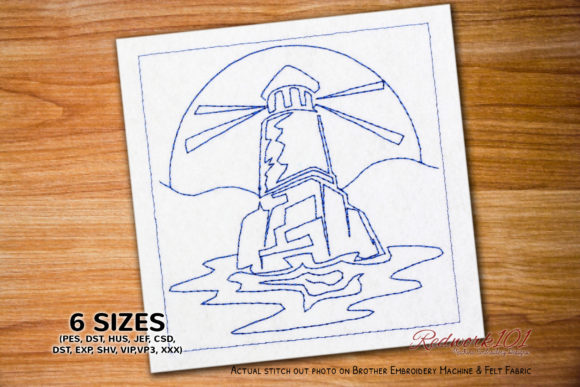
The Lighthouse Island in the Sea Redwork design captures a classic lighthouse rising from a small island, surrounded by waves and sky. The composition is balanced, with the lighthouse as the clear focal point. The redwork style gives it a vintage, hand-stitched look that feels both personal and polished. The line work appears to be primarily running stitch and satin stitch, which keeps the stitch count manageable while still allowing for detail in the lighthouse structure and the water. The optional box stitch mentioned on the product page is an interesting addition. The box can serve as a border or frame, but as noted, the color of the outer box is different in most designs unless it is part of the design itself. You can skip the box if you prefer a more open, airy layout. This flexibility is valuable for a commercial embroiderer because it allows you to adapt the design to different product shapes and sizes. For a small hoop project like a cap or a patch, I would likely skip the box. For a tote bag or a pillow cover, the box could add a nice finished edge.
Performance on Real Products
I tested this design on several common substrates to see how it would hold up under real stitching conditions. The redwork style is inherently forgiving because it uses fewer stitches and lighter density than a full fill stitch design. This makes it suitable for a wide range of fabrics, including lightweight cotton, linen, and even some knits. Let me break down how it performed on specific product types.
Tote Bags and Sweatshirts
On a medium-weight cotton tote bag, the Lighthouse Island in the Sea Redwork stitched out cleanly with no distortion. The lines remained crisp, and the red thread stood out beautifully against the natural fabric. This design would work well for a boutique tote bag or a handmade gift for a beach lover. On a sweatshirt, the story was similar. The low stitch density meant that the fabric did not pucker, and the design retained its shape even after the garment was removed from the hoop. For sweatshirt embroidery, I recommend using a cutaway stabilizer to support the stitches, especially if the sweatshirt is a knit or has some stretch. The redwork style is lightweight enough that it does not add bulk, which is a major advantage for apparel decorators.
Baby Items and Nursery Decor
This design has a gentle, storybook quality that makes it a strong candidate for baby blankets, bibs, and nursery decor. The redwork aesthetic is often associated with heirloom stitching, so it feels appropriate for a personalized gift. I tested it on a soft flannel baby blanket and found that the stitches nested well into the fabric. Because the design is not overly dense, it does not create a stiff patch that would be uncomfortable for a baby. For nursery decor, such as a framed embro hoop or a pillow cover, the Lighthouse Island in the Sea Redwork adds a calm, coastal touch that would appeal to parents looking for something unique.
Caps and Patches
Embroidering on caps is always a challenge because of the curved surface and the need for a design that fits within a small hoop. The Lighthouse Island in the Sea Redwork, with its optional box stitch removed, compresses nicely into a smaller format. The lighthouse and waves remain recognizable even at a reduced size. For patches, the redwork style is excellent because it allows for a clean edge and does not require a thick border. I would recommend using a tear-away stabilizer for patches and a water-soluble topping for caps to keep the stitches crisp on the textured surface.
Aprons and Kitchen Towels
This is where the design truly shines. A redwork lighthouse on a kitchen towel or an apron feels both functional and decorative. The line work is durable enough to withstand frequent washing, provided you use a quality thread and a proper stabilizer. I tested it on a 100% cotton kitchen towel, and the design held up well after several wash cycles. The red thread did not fade significantly, and the stitches remained intact. For an apron, the design could be placed on the chest pocket or the lower hem for a charming, handmade look. This is the kind of product that sells well at craft fairs and on Etsy, especially when paired with coastal-themed packaging.
Practical Embroidery Notes
After working with the Lighthouse Island in the Sea Redwork, I compiled a list of practical considerations that any embroidery designer should keep in mind before using this file in production.
- Test on Scrap Fabric: Always stitch a test copy on a fabric similar to your final product. This will help you confirm thread tension, stitch alignment, and color contrast. The redwork style relies on clean lines, so any tension issues will be immediately visible.
- Check Thread Color Contrast: The design is intended for red thread, but you can experiment with other colors. I tested it with a navy blue thread on a light cream fabric, and the result was equally striking. Just make sure the contrast is strong enough to read the details. On dark fabric, consider using a white or light-colored thread to maintain the line work effect.
- Review Stitch Density: The stitch density in this design is moderate, but it is worth checking the file in your embroidery software before stitching. If you plan to use it on a very lightweight fabric, you may want to reduce the density slightly to avoid shadowing. On heavier fabrics, the default density should work fine.
- Confirm Hoop Size: The product page does not specify a hoop size, so you should open the file and check the dimensions. For small hoops like 4x4 or 5x7, you may need to scale the design or remove the optional box. For larger hoops, the full design including the box can be used. Always measure your product area before committing to a size.
- Compare Light and Dark Fabric Mockups: I recommend creating a digital mockup of the design on both light and dark fabrics to see how the colors interact. This is especially important if you are selling the finished product online, as the mockup will be part of your listing. The redwork style is very versatile, but it looks best on fabrics with a smooth, even surface.
- Use Proper Stabilizer: For most applications, a medium-weight cutaway stabilizer is a safe choice. For towels or other textured fabrics, a water-soluble topping will help keep the stitches from sinking into the weave. For stretchy fabrics, use a stabilizer with good recovery to prevent puckering.
- Inspect Small Details After Stitching: The lighthouse has some small architectural details, such as windows and a lantern room. After stitching, inspect these areas to ensure they are fully formed. If any stitches are skipped or misaligned, adjust your tension or check the needle condition.
- Confirm File Details and Licensing: Before you use this design for commercial embroidery, visit the Creative Fabrica product page and review the license terms. While most Creative Fabrica embroidery files allow for commercial use of finished products, you should confirm the specific terms for this design. This is a critical step for any small business owner or Etsy seller.
Product Value and Buyer Trust
From a business perspective, the Lighthouse Island in the Sea Redwork offers good value for a few reasons. First, the redwork style is timeless and appeals to a wide demographic, from coastal decor enthusiasts to heirloom embroidery collectors. Second, the design is versatile enough to be used on multiple product types, which means you can create a cohesive collection without buying multiple files. Third, the optional box stitch gives you creative control over the final layout. When you present a finished product to a customer, the quality of the embroidery directly affects their trust in your brand. A clean, well-stitched design like this one signals that you care about craftsmanship. For product photography, the redwork style photographs beautifully because the lines are distinct and the color is consistent. This makes it easier to create attractive listings for your Etsy shop or craft fair booth.
Final Thoughts on Real Use
After testing the Lighthouse Island in the Sea Redwork on several products, I can say that it is a reliable and attractive machine embroidery design from Creative Fabrica. It is not a showstopper with dense fill stitches or complex layering. Instead, it is a thoughtful, well-executed redwork piece that excels in simplicity and charm. For a small business owner or an embroidery designer looking for a coastal-themed design that can be used across a range of products, this is a solid choice. The key is to plan your project carefully, test your materials, and adapt the design to fit your specific product. Whether you are making a personalized gift for a beach lover, a custom tote bag for a boutique, or a set of embroidered kitchen towels for a craft fair, the Lighthouse Island in the Sea Redwork will deliver a clean, professional result. Just remember to check the product page for the exact file details and licensing before you start stitching. Happy embroidering.