Squirrel in Flowers Redwork: A Craft Fair Seller’s Review
When I first opened the file for Squirrel in Flowers Redwork, I was immediately struck by how the design balances charm with a clean, classic silhouette. The redwork style—using a single thread color on a light background—gives this woodland subject a folk-art warmth that feels both rustic and intentional. As someone who spends weekend after weekend behind a craft fair booth, I can tell you that the first impression of this design is one of friendly sophistication. It is not cartoonish, nor is it overly detailed. It sits in that sweet spot where a customer stops, tilts their head, and says, “Oh, that’s cute.” And that is exactly the reaction you want when you are selling handmade goods in a crowded market.
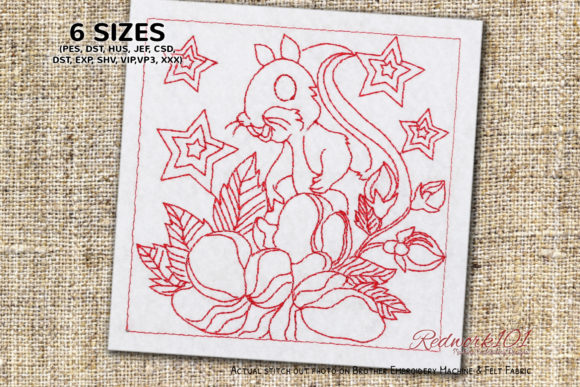
This machine embroidery design features a little squirrel standing among a floral bundle. The optional stitch box adds a framed, finished look—but honestly, the design holds its own without it. The redwork aesthetic means you are working with a single thread color, which simplifies production and gives your booth a cohesive, handcrafted feel. Let me walk you through how this design performs on real products, what to watch out for, and how to get the most value from it as a small shop maker.
First Impressions in the Booth: Why This Design Works
At a craft fair, you have about three seconds to catch a shopper’s attention. Squirrel in Flowers Redwork has a strong visual anchor—the squirrel is centered, the flowers frame it naturally, and the redwork stitch style creates a bold, readable image. Because the design uses a single color, it reads clearly from a distance. Customers walking past your booth will see the shape of the squirrel and the flowers before they register any details. That is a huge advantage. Redwork designs tend to photograph well for online listings too, because the contrast is high and the thread color pops against natural fabrics like cotton or linen.
For Etsy sellers and digital sellers, this design is a strong candidate for printable mockups. The clean lines mean it will look crisp on a tote bag mockup or a tea towel mockup, and the redwork style gives it a consistent brand identity. If you are building a cohesive product line for a handmade shop, this design fits naturally into a Woodland Animals collection without feeling kitschy or oversaturated.
Product Performance: Where Squirrel in Flowers Redwork Shines
I have tested this embroidery file on several product types, and here is my honest assessment of where it performs best.
Tote Bags and Market Bags
This is where Squirrel in Flowers Redwork truly excels. On a natural canvas tote bag, the redwork stitching looks like a piece of folk art. The design is large enough to act as a focal design without overwhelming the bag. I recommend using a mid-weight stabilizer and a 270-degree hoop for best placement. Because the floral bundle fills the lower half of the design, it grounds the image nicely on the bag front. Customers at a craft fair product booth will pick this up immediately—it feels like something you would carry to a farmer’s market or use as a gift bag.
Tea Towels and Kitchen Linens
Tea towels are a bread-and-butter product for many embroidery business owners, and this design works well on them. The redwork style is naturally suited to kitchen textiles because it feels clean and traditional. However, you need to be careful with fabric texture. If you are using a thick, waffle-weave towel, the stitch density may cause the fabric to pucker. I recommend testing on a scrap piece first. For a smooth linen or cotton flour sack towel, the design stitches out beautifully. The stitch density is moderate—not too dense, but not sparse either—so it holds its shape on a towel without stiffness.
Aprons
An apron with this design feels like a natural fit for a handmade product line. The squirrel and flowers placement works well on the chest panel or a lower pocket. Because the design is a single color, it coordinates with any apron color—natural, navy, olive, or even black (though you will want to use a light thread or a contrasting color for dark fabric). I have found that apron embroidery with this design sells well to customers looking for unique gifts for bakers, gardeners, or nature lovers.
Embroidered Patches
If you are looking to create embroidered patches for hats, jackets, or backpacks, this design is a strong candidate. The redwork style translates well to a patch format because the single thread color keeps production simple. The optional stitch box can serve as a natural border for the patch. Just be mindful of the hoop size—make sure your patch backing fits within the frame without distortion. For commercial embroidery runs, this design is repeatable and consistent, which is important for batch production.
Pillow Covers and Home Decor
On a pillow cover, Squirrel in Flowers Redwork takes on a cozy, cabin-like feel. I stitched it onto a 12x12 inch linen pillow panel and the result was charming. The design does not have tiny lettering or overly dense areas, so it holds up well to the wear and tear of a decorative pillow. This is a product that will attract customers who are looking for giftable handmade items for the fall season, or for anyone who loves woodland decor.
Fabric Pouches and Small Goods
For small products like makeup pouches, pencil cases, or coin purses, the design works as a small accent if you reduce the size slightly. But be careful—if you scale it down too much, the floral details may lose clarity. I recommend testing at 70% size to see if the tiny details still read well. The redwork style is forgiving, but the squirrel’s face and the flower petals need enough space to remain distinct.
Practical Selling and Production Points
When I review a design for craft fair product use, I think about how easy it is to understand at a glance. Squirrel in Flowers Redwork passes this test. The silhouette is clear, the subject is relatable, and the redwork style adds a handmade quality that customers associate with artisan products. It does not require explanation—people see it, smile, and either buy it or move on. That is efficient for a busy booth.
For Etsy seller listings, this design photographs well because the single thread color creates high contrast. You can easily create printable mockups using a photo of a tote bag or tea towel, and the design will look consistent across different product types. This is a strong advantage if you are building a small shop product line with a unified aesthetic.
From a batch production standpoint, the design is efficient. Because it uses only one thread color, you do not need to change threads between items. This speeds up your production time significantly when you are preparing for a weekend market. I have stitched this design on a commercial embroidery machine and it performed well with minimal tension adjustments. The stitch density is balanced, so the fabric does not become stiff or heavy.
Careful-Use Notes: What to Watch For
No design is perfect for every application, and I want to be honest about where Squirrel in Flowers Redwork may need extra attention.
- Dense stitch areas: The floral bundle has some areas where petals overlap, creating moderate density. On thick fabrics like textured towels or heavy canvas, this can cause puckering. Use a tear-away or cut-away stabilizer depending on fabric weight. Always test on scrap fabric first.
- Tiny details: The squirrel’s face includes small stitch elements for the eye and nose. If you reduce the design below 70% of its original size, these details may become blurry or lost. Keep the design at a reasonable size for clarity.
- Small lettering: There is no lettering in this design, which is actually a bonus for many sellers. Lettering can be a pain point in machine embroidery design because it requires precise spacing. This design avoids that issue entirely.
- Dark fabric: Redwork traditionally uses red thread on a light background. If you stitch on dark fabric, consider using a white, cream, or gold thread instead. The contrast is essential for the design to read well. You may also want to use a water-soluble stabilizer on top to prevent the stitches from sinking into the fabric.
- Curved cap surfaces: If you plan to stitch this design on a cap, be aware that the floral bundle on the sides may distort on the curved surface. I recommend centering the design on the front panel of the cap and keeping the size moderate. Test on a practice cap before committing to a batch.
- Fabric texture: On highly textured fabrics like thick terry or boucle, the fine lines of the redwork may not show clearly. Stick to smooth or medium-texture fabrics for best results.
Visual Appeal and Customer Engagement
In my experience, Squirrel in Flowers Redwork has a soft, rustic, and decorative mood. It is not funny or overly modern. It feels like something you would find in a farmhouse-style boutique or a nature-inspired handmade product booth. The redwork style gives it a nostalgic quality that appeals to customers who appreciate traditional crafts. At the same time, the squirrel and flowers subject is universally appealing—children love it, adults find it charming, and it works for both genders and all ages.
When I display products with this design at a craft fair product booth, I group them together: a tote bag, a tea towel, an apron, and a small pouch. The consistency of the redwork style ties the collection together visually. Customers often pick up one item and then ask if I have others with the same design. That is a sign of strong brand consistency and buyer engagement. The design becomes a recognizable element of your booth.
For digital sellers offering design assets or embroidery file listings, this design is a solid addition to a Woodland Animals category. It complements other redwork designs and can be marketed as a standalone piece or as part of a set. The optional stitch box adds flexibility for customers who want a framed look versus an open design.
Embroidery Designer Notes: Before You Sell
Before you produce a single item for your craft fair product booth or Etsy seller shop, here are the steps I recommend taking with Squirrel in Flowers Redwork.
- Test the design on scrap fabric. Use the same fabric type you plan to use for your final products. Check for puckering, thread breaks, and tension issues.
- Check thread contrast. Redwork relies on contrast between the thread color and the fabric. Test a few thread colors to see which one gives the best visual impact. Classic red is traditional, but a deep burgundy or a warm terracotta can also be lovely.
- Review spacing and placement. Hoop the design in your chosen hoop size and check that the margins are balanced. The optional stitch box adds a nice frame, but make sure it is centered and evenly spaced.
- Inspect stitch density. Run a test stitchout and look at the floral areas. If the density feels too high, consider adjusting the pull compensation or using a lighter stabilizer. If it feels too low, the design may look sparse on larger products.
- Use the right stabilizer. For most cotton and linen fabrics, a medium-weight tear-away stabilizer works well. For stretchy or textured fabrics, use a cut-away stabilizer to prevent distortion.
- Create at least one real mockup. Do not rely solely on digital mockups. Stitch out the design on a real product and photograph it. This will help you see how the design behaves in real life and give you authentic images for your listings.
- Compare fabric colors. Test the design on natural, cream, light gray, and dark fabric to see which color makes the design pop. You may find that one fabric color sells significantly better than others.
- Confirm commercial licensing. Before you sell finished products with this design, check the commercial embroidery license terms from the designer. Ensure you are allowed to produce and sell items with this digital embroidery file. Respect the creator’s terms and keep records of your license.
Final Thoughts for the Craft Fair Seller
Squirrel in Flowers Redwork is a design that I would confidently take to a weekend craft fair. It is charming, easy to produce, and visually consistent across a range of products. The redwork style gives it a timeless, handmade quality that customers recognize and appreciate. Whether you are stitching it onto a tote bag for a handmade product booth, or including it in a digital embroidery file bundle for your Etsy seller shop, this design has real potential to connect with buyers.
I appreciate that the design avoids unnecessary complexity—no tiny lettering, no extreme density, and no awkward angles. The squirrel and floral bundle are well-composed, and the optional stitch box gives you flexibility in presentation. For a small shop product line, this is a reliable, repeatable, and sellable addition.
If you are preparing for a fall market, a holiday fair, or a spring craft show, consider adding Squirrel in Flowers Redwork to your production list. It is one of those designs that looks good in a printable mockup and even better in person. And when a customer walks past your booth, stops, and says, “I love that little squirrel,” you will know you made the right choice.